.webp)
Standing Seam vs. Exposed Fastener Metal Roofing for Hilton Head Homes
When you’ve decided you want a metal roof, you’re choosing a system that could remain on your Hilton Head Island, South Carolina, home for decades. Understandably, your main concerns are performance, appearance, and long-term cost.
But choosing metal is only the first decision. You’ll also need to consider which type of metal roofing makes sense for your property. Two of the most common options–standing seam and exposed fastener systems–differ in how they’re attached, how much maintenance they typically require, and how they handle coastal exposure.
This article provides a standing seam vs. exposed fastener metal roof comparison that can help Hilton Head Island homeowners decide which system better matches their needs and style preferences.
The Difference Between Standing Seam & Exposed Fastener Metal Roofing
The biggest difference is how the panels are secured to the roof.
Exposed fastener roofing uses screws installed directly through the metal panels. The screw heads and sealing washers remain visible after installation.
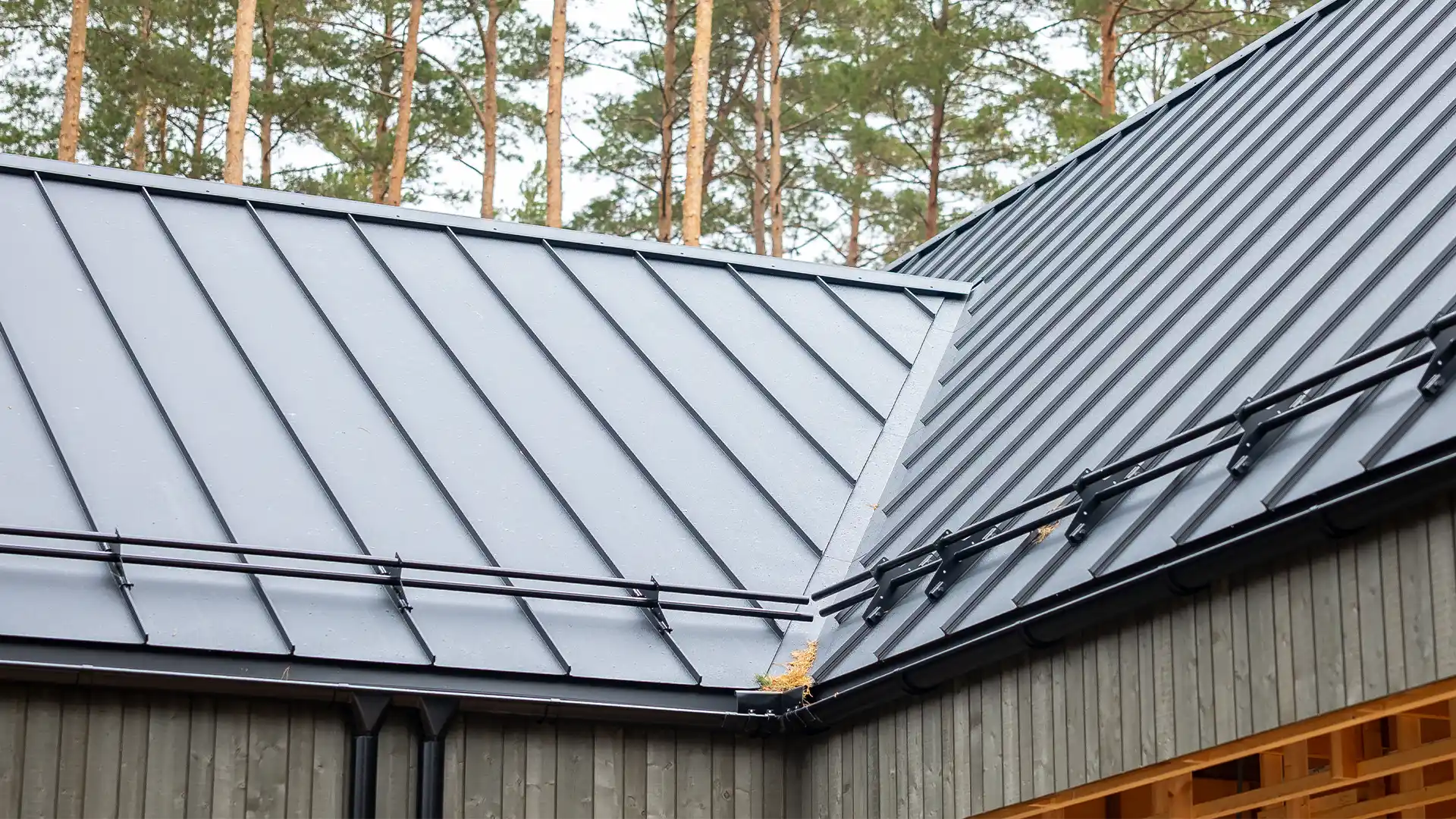
Standing seam roofing uses raised seams where panels connect. Its primary fasteners or clips are concealed beneath the panels or seams rather than exposed across the roof surface.
That may sound like a small construction detail, but fastener placement can have a significant impact when your home regularly encounters Hilton Head Island’s coastal weather.
Why Fastener Placement Matters Near the Ocean
An exposed fastener creates a penetration through a metal roofing panel. Sealing washers are designed to keep water from entering around those penetrations, but the fasteners remain exposed to sunlight, rain, humidity, and salt air.
Metal also expands and contracts as temperatures change. Eventually, this movement can affect exposed screws and washers. Some fasteners may loosen, while sealing components can deteriorate and require maintenance.
Standing seam roofing protects its primary fasteners beneath the roofing system. With fewer exposed attachment points across the panels, there are fewer fasteners directly subjected to coastal conditions.
Comparing Metal Roof Styles in Heavy Rain & Strong Winds
Hilton Head Island gets plenty of heavy rain, and tropical storms or hurricanes can bring strong winds and wind-driven water.
Both metal roofing systems can shed rain effectively when correctly designed and installed. Standing seam roofing has the advantage of fewer exposed penetrations across the primary roof surface, reducing potential areas where deteriorated fasteners could eventually allow water intrusion.
Wind performance is more complicated. The specific product, attachment method, roof design, and installation all affect how a system performs. Homeowners should look at the wind ratings and installation requirements of the specific roofing product rather than assuming all metal roofs perform identically.
When comparing standing seam vs. exposed fastener metal roofing in Hilton Head, ask your contractor how the proposed system is designed for local coastal conditions. Water and wind aren't the only concerns. Salt can also influence which products make sense.
How Salt Air & Corrosion Affect Hilton Head Metal Roofs
Salt carried through coastal air can accelerate corrosion in susceptible metals and components. The closer your property is to saltwater, the more important product and material selection can become.
With exposed fastener roofing, screws and washers are directly exposed to those conditions. Standing seam reduces exposed fastening points, but that doesn't mean every standing seam roof is automatically appropriate for an oceanfront property.
Metal type, protective coatings, fasteners, clips, cut edges, and other components all deserve consideration. Manufacturer requirements and warranty limitations may also vary based on proximity to saltwater.
Which Metal Roof Requires More Maintenance?
Maintenance is one of the clearest differences between exposed fastener and standing seam metal roofing.
Exposed fasteners need periodic attention because screws and sealing washers remain outside. Inspections can identify backed-out screws, damaged washers, corrosion, or other problems before they cause leaks.
Standing seam roofs still need inspections, especially following severe coastal storms. However, concealing the primary fasteners eliminates much of the maintenance associated specifically with exposed screws and washers.
Metal Roofing Cost, Appearance & Lifespan
Your choice of metal roofing often comes down to what matters most to you.
Consider:
- Cost - Exposed fastener metal roofing typically has a lower upfront price. Standing seam usually costs more because of its materials and installation requirements.
- Appearance - Standing seam creates clean lines without rows of visible screws. Exposed fastener roofing has a more visibly fastened panel appearance.
- Maintenance - Exposed screws and washers generally require more periodic attention.
- Lifespan - A properly installed metal roofing system can offer a long service life, although actual longevity for either system depends on materials, installation, maintenance, and environmental exposure.
If your main priority is reducing the initial project price, exposed fastener roofing may be worth considering. If you’re more focused on long-term performance, concealed fasteners, and a streamlined appearance, standing seam may justify its higher upfront cost.
JW Roofing Installs Metal Roofing in Hilton Head Island
JW Roofing helps Hilton Head Island homeowners select roofing systems based on their property, budget, and long-term priorities. We offer a variety of metal roofing systems, including standing seam/vertical panel, metal shingle, metal tile, and metal shake options.
JW Roofing is fully licensed and insured, offers free roof inspections, and brings decades of roofing experience to residential projects. Our team also works with asphalt shingles, tile, and flat roofing, so we can discuss different options based on your home rather than automatically recommending one material.
Choose the Ideal Metal Roof for Your Hilton Head Island Home
If you’re comparing standing seam vs. exposed fastener metal roof options, the right answer depends on your home’s location, roof design, budget, and preferences. Contact JW Roofing today to receive personalized guidance on the best option for your Hilton Head Island, SC, home.